
Dianne
The Summer in Orient

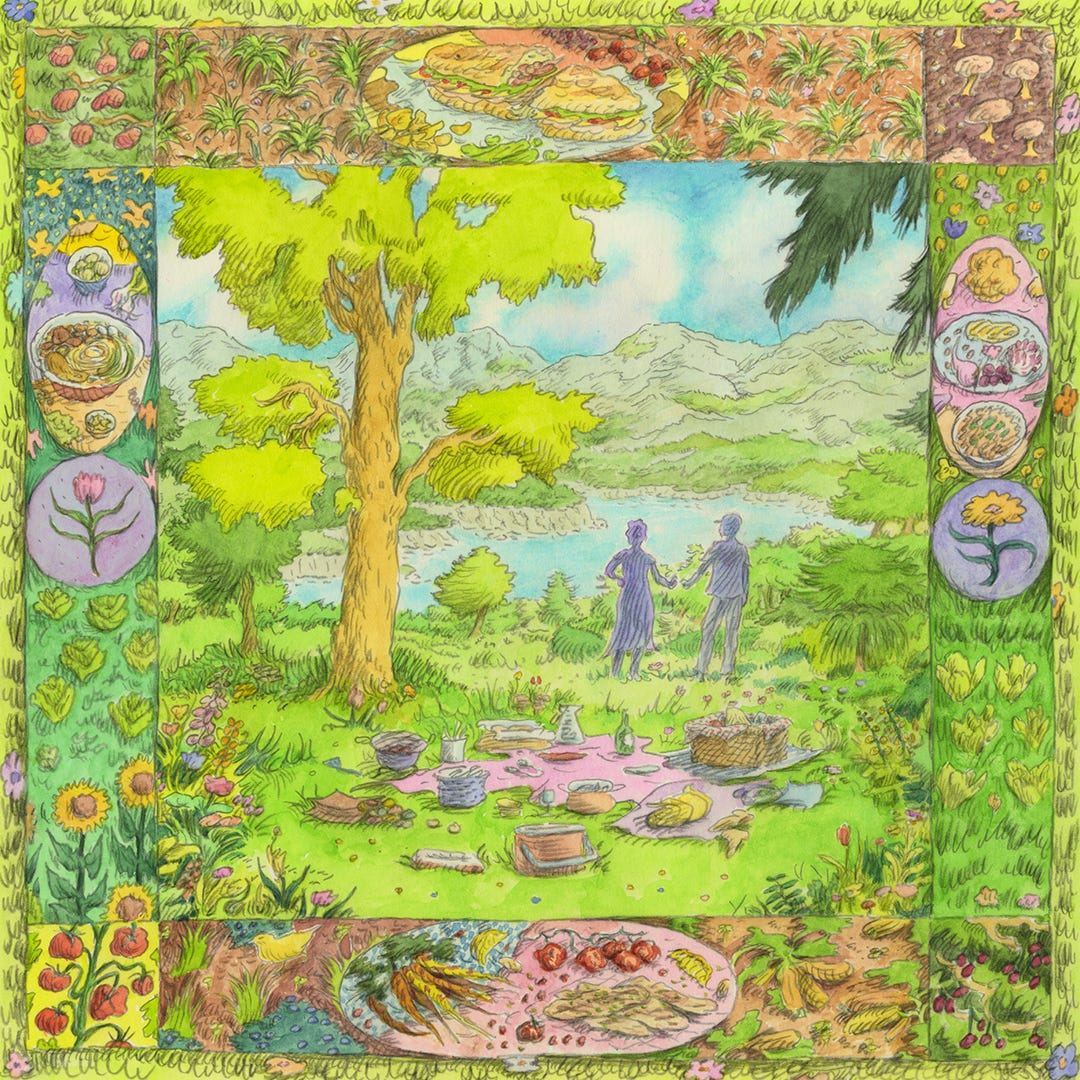
By JD Eiseman1
“You know what they’re doing with the chemtrails, right?” she asked, passing me a joint. “The CIA and the - ding ding - oh, that’s the roast beef!” She turned the alarm off on her phone and briskly swept down the stairs to the kitchen, opening the oven door and pulling out a glistening hunk of meat, sizzling on a sheet pan, medium-rare. “Oh my God, that looks perfect - do you still want to do the swordfish for dinner? What time is it? 11, OK - let’s start getting ready for lunch. This has to rest - can you slice the bread? Do we still have tomatoes?”
It was the summer of 2013 and I had just returned from Costa Rica, where I’d fled from Los Angeles on a one-way ticket in search of—something. My return was not to California, but to New York, Long Island, where I’d been born and raised. I’d gone off backpacking, intent on making my way to a farm on the Caribbean coast, where I was to take up residence in exchange for manual labor. I had never worked on a farm, nor did I have any knowledge or skills as it pertained to farming—but it sounded nice in contrast to the rat race I, like most young Americans, had been participating in for the three brief years that had transpired since the end of college.
Back in New York, broke and without direction, I took a job in Orient, offered to me by the same friend who had introduced me to the farm in the jungle, the farm I got lost on the way to. I found myself in heavy rain as I traversed on foot alone through thick Caribbean forest, clothes caught on barbed wire, shoes stuck in mud, the sounds of monkeys closing in. The directions I’d been given were futile (“Turn left at the big tree”) and I ended up on an empty, rugged beach at the end of the world, making eye contact with a tiny crab and reflecting on the existential condition that brought me here. I never made it to the farm and deemed this encounter with death to be the end of my sojourn and my call home.
The job in Orient, out on the North Fork of Long Island, was at a filmmaking camp run by my friend’s stepfather, but the job had nothing to do with filmmaking (which had been my line of work up to this point). The job was helping in the kitchen, preparing three meals a day for the faculty and students. This is where I met Dianne.
Dianne had operated a market in Palisades, just outside the city. In an opening press release, she espoused the following: “I plan to serve simple, quality, healthy food that is organic and locally grown, whenever possible. We will be highlighting local artisans who are making jams, honey, and other food products. We’ll offer cost-effective daily specials and free samples. It’s important to me to serve everyone in this community. No matter what your income, people want value.” She was a longtime friend of the camp’s organizers and had been hired to lead the kitchen and write the menus, working out of a church basement that had been rented for the next three weeks.
Most of these students were college-aged or younger and would’ve been satisfied with cereal for breakfast and cold cuts for lunch. But Dianne had a different philosophy: these meals needed to be nutritious, organic, and from-scratch. If we were serving turkey sandwiches for lunch, we needed to roast the turkey ourselves. Salad dressings wouldn’t come from a bottle, but would be combined by hand, vigorously shaken. We peeled and roasted whole garlic. Nothing from a can. We didn’t make the sourdough, but it was brought in from Balthazar (then misted with water and refreshed in the oven for 15 minutes, the crust crisping up). Everything had to be fresh and of the highest quality, budget be damned. Whether it made a difference to the kids, I don’t know—but it mattered greatly to Dianne.
I had worked in restaurants before this (a banquet hall bartender, serving Bloody Marys at baby showers, an out-of-my-depth food runner at a high-end seafood restaurant, my hands trembling as I walked platters of oysters to the wrong table, ice spilling onto the floor) but never as a cook, never ‘back-of-house.’ Cooking, though, had been a constant in my life, something I enjoyed doing from an early age: learning to properly scramble eggs on Christmas morning at my grandmother’s house; walking to Pathmark after school to buy ingredients for a recipe I’d written down from Rachael Ray, my mom coming home from work to an explosion of dishes and dinner on the table; making late-night layered taco dips for my college roommates (“make The Dip,” was a frequent 2 am request); hosting dinner parties and potlucks in those first few postgrad years of adulthood. But cooking all day, from morning to night: this was new - and it was fun. A way to turn off the internal chatter and focus on the task at hand. Work that was meditative and immediate - on my feet, using my body and my senses to slice, peel, lift, chop, season, stir, taste.
Between prep, Dianne and I would share a joint in the garden and talk about our lives. She was an open book and it was easy to be one around her, as well - no judgment, an attentive listener, holding eye contact, nodding when in agreement, laughing when she found something funny. She was 53 years old and impeccably beautiful, with perfect posture, her silver hair tied up on the crown of her head (my friends would later refer to her as ‘the silver fox’). Our conversations would often veer into unexpected territory —from chemtrails and the Mayan calendar to regenerative agriculture and homesteading—she was slightly paranoid but not afraid, conspiracy-minded but a fount of optimism. She understood that the world was fucked, but that we had the collective capacity to make it so much better.
This clarity was something we shared, and it’s here that we really started to connect—I started telling her about how I’d ended up here and where I wanted to go. We talked about my family’s property in the Catskills and what it could be—a retreat from the world outside, a place where we could grow our own food, make art, and live among like-minded people.
I ended up staying in New York after that summer, moving into that house in the Catskills, determined to implement the vision I had been dreaming up. I struggled to find work, my family becoming increasingly concerned with the life choices I was making. I thought about what I enjoyed doing, and what I was capable of - and I turned again to cooking. I started catering parties for friends and family, hosting monthly supper clubs on the second floor of a local bookshop, and selling prepared meals at the weekly farmer’s market. I continued to obey Dianne’s ethos—driving for hours to pick up the right cut of meat from a small family farm or to pick strawberries as they came into season, miles away. Quality could not be spared for the sake of convenience - good ingredients mattered.
I took a panoply of jobs those first few years here, but food was always the common denominator. I drove a produce truck, carrying bags of vegetables up flights of stairs in Albany government buildings. I spent several summers as a farmhand, dragging irrigation lines across a rocky field, washing kale and scrubbing eggs, slicing my hand open with a dull knife while harvesting cauliflower. I became an AM line cook at a hotel, dropping pancakes and scrambling eggs for hungry skiers, learning to work two tickets ahead and to never run out of mise en place on a holiday weekend - and then a floor manager at said hotel, leading to an opportunity to help open and run Fellow, the cafe of which I am now the general manager of.
Throughout this journey, Dianne and I remained friends—a call from her was always welcome, and we often spent an hour or more catching up, talking about the world and our ideas for it. I would often be invited to dinners at her cottage, which sat on a cliff above the Hudson, full view of Tappan Zee Bridge from the yard, where candlewax would melt onto the tablecloths as the sun went down and the conversation would linger into the night. One year, we would celebrate her daughter’s birthday at the picnic table under the cherry tree in my backyard, gorging on king crab legs and caviar, the mood not in the slightest ostentatious, but festive and merry. These occasions were a reminder that life is to be enjoyed, more so when in the company of others: sharing, serving, grateful for full bellies and time well spent.
I was on a road trip to Montreal last October, just over the border, when I got a call from Dianne. It had been months since we last spoke, and she had called to let me know she had cancer taken out of her arm. She was fine now, she said—confident it was gone. As I hit the city limits, we said our goodbyes, vowing to make plans around the holidays. By Christmas, the cancer had returned. I never heard from her after that.
Dianne passed away on February 27th. At her memorial this summer, at a boathouse on the banks of the Hudson, I stood at the back of the room and listened to her brothers, her daughters, her friends, one after the next, recount the impact Dianne had on their lives and, by turn, all of our lives. She had led with grace, principled and full of conviction, remarkably selfless. More interested in hearing what you were up to than telling you about what she was up to. Encouraging us to dream, sparking a flame in so many, one story after the next. Dianne had not just been these things to me, but to all of us.
I’m constantly striving to connect with the younger version of myself who met Dianne in the summer of 2013 —the young idealist with all these hopes and dreams for what his life and the world could become. And when I stop and look, I’m reminded that I have everything I ever wanted - a quiet life in the country and a community that I’ve both helped nurture and that has nurtured me. There’s more work to be done, of course - the work never really ends. But I miss my friend Dianne, championing me at every turn. I think of us sitting in the pews of that empty church in Orient, July light burning through stained glass - silent and dreaming, together in that liminal space between now and then.
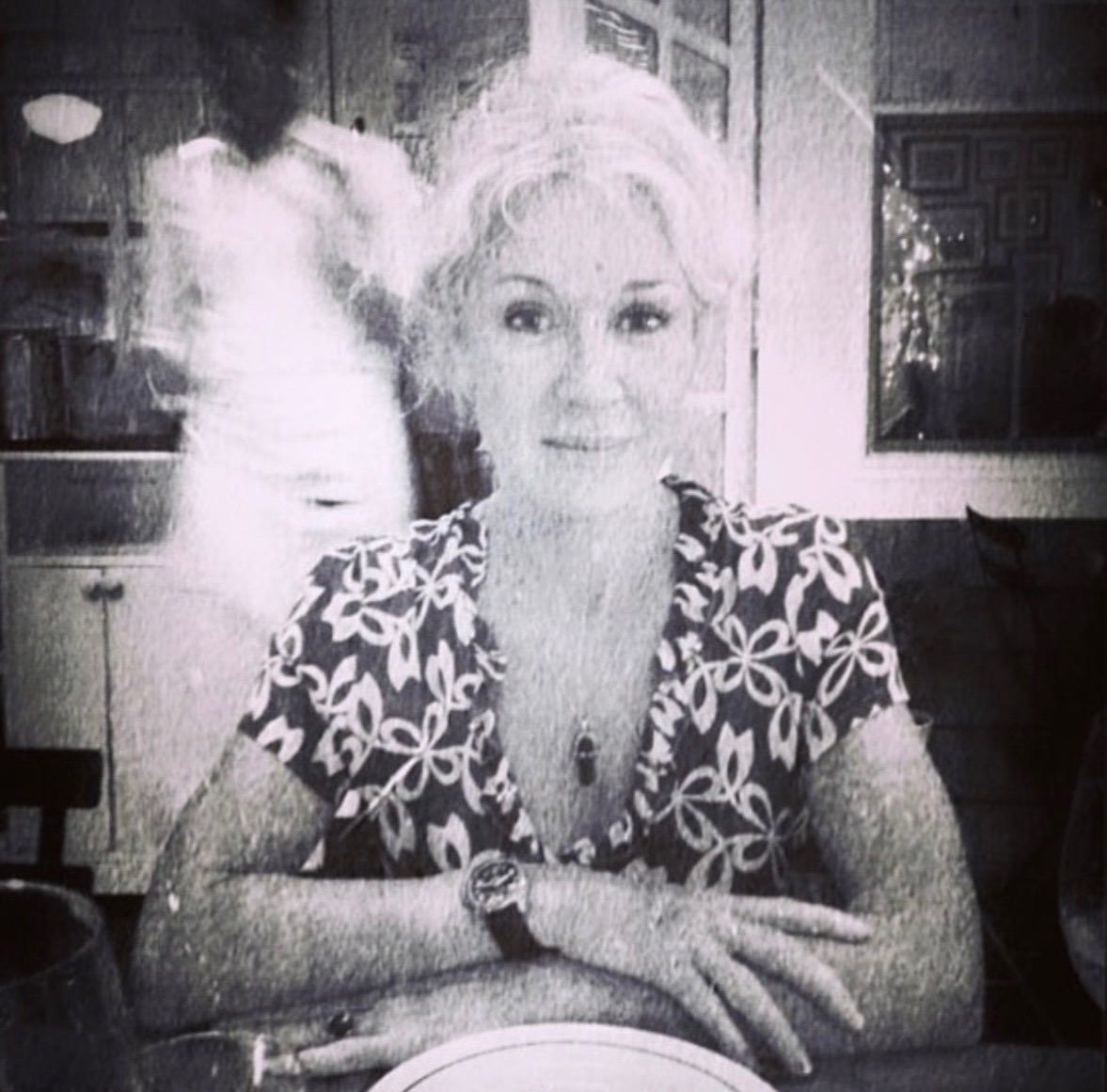
A special thank you to this week’s illustrator MouseMouse2. You can see more of his work here.
JD Eiseman lives in Round Top, NY with his dog Benny.
MouseMouse (Ole Tillmann) is an illustrator based in Cologne, Germany. He earned his BFA from the Rhode Island School of Design and has since worked across magazines, television, and video games. He co-founded the game development studio Slow Bros. and most recently served as the art director for their award-winning video game “Harold Halibut.”
His work has appeared in or been created for Zeit Magazin, Netflix, TASCHEN, VICE, Disney, Food&Wine, WDR, ZDF, Aktion Mensch, Rebell Comedy, and others.
Absolutely beautiful read, I’m so glad you wrote it, and I can feel the sweetness and care that you shared.
Absolutely and simply LOVELY. Made me emotional to read about this special person and friend. And incredible SENTENCES to say the very least.